
Remember when the entire media class spent weeks mocking Trump for wanting to buy Greenland? Remember the hot takes, the late-night jokes, the editorial board condescension? “He thinks you can just buy countries!” they howled, wiping tears of laughter from their eyes while completely missing the point.
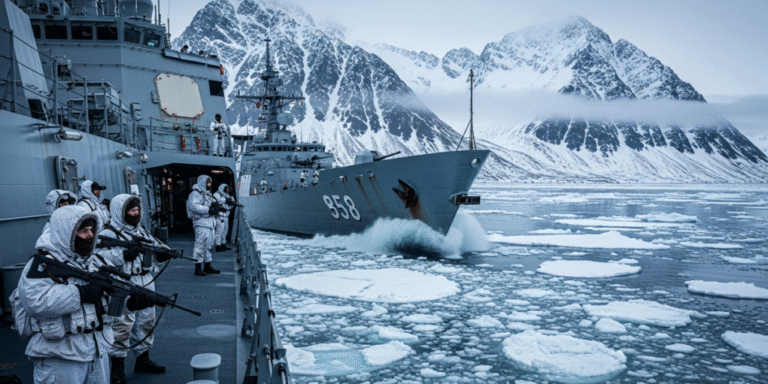
Nobody’s laughing now. NATO just launched “Arctic Sentry” — a full-scale military security operation in the Arctic — because the threats Trump identified are real, they’re growing, and Europe finally got the memo.
What Arctic Sentry Actually Is
NATO Secretary General Mark Rutte announced the operation on Wednesday, citing Russia’s increased military activity and China’s expanding interest in the High North. The initiative pulls together existing exercises — Denmark’s Arctic Endurance and Norway’s Cold Response — under one coordinated operational umbrella.
That’s NATO-speak for: we weren’t taking this seriously, and now we are, because someone made us.
Allied Command Operations is now responsible for planning and executing a cohesive Arctic strategy — something that didn’t exist in any meaningful form before Trump started banging the table about Greenland. The operation gives NATO planners full visibility of allied activity in the region and creates a framework for enhanced military presence going forward.
Troops from across the alliance are already arriving in Norway. Denmark is running multi-domain exercises designed to test capabilities in Arctic conditions. The machinery is spinning up — not because NATO woke up one morning with a sudden passion for polar security, but because an American president made it impossible to ignore.
The Greenland Strategy
Trump’s Greenland play was never about buying real estate. It was about leverage, positioning, and forcing a conversation that the comfortable bureaucrats in Brussels had been avoiding for years.
Greenland sits on top of critical shipping lanes, rare earth mineral deposits, and strategic military geography that becomes more important by the year as Arctic ice recedes. Russia has been building military bases above the Arctic Circle. China — which has no Arctic territory whatsoever — declared itself a “near-Arctic state” and has been steadily increasing its presence in the region.
Both adversaries see the Arctic as the next great power competition zone. And until Trump started making noise about Greenland, the Western response was a collective shrug.
Last month, Trump posted that he’d had “a very productive meeting” with Rutte and that they’d formed “the framework of a future deal with respect to Greenland and, in fact, the entire Arctic Region.” He said the solution, if completed, would benefit both the United States and all NATO nations.
That’s not a real estate deal. That’s a security architecture negotiation. And Arctic Sentry is the first tangible result.
The Russia-China Squeeze
The White House laid out the stakes plainly: “The Arctic is a critical region for U.S. national security and the economy. As an Arctic nation, the United States will pursue its security and economic interests and ensure safety, stability, and prosperity in the face of growing competition from China and Russia.”
Russia has rebuilt and expanded Soviet-era Arctic military installations. They’ve deployed advanced missile systems, reopened airfields, and stationed nuclear-capable submarines in northern waters. Their Northern Fleet is the most powerful naval force in the Arctic by a wide margin.
China, meanwhile, has been investing billions in Arctic infrastructure, research stations, and shipping route development. Their interest isn’t scientific — it’s strategic. Control of Arctic shipping lanes would reshape global trade, and the mineral resources beneath the ice represent trillions in untapped wealth.
The U.S. and NATO have been behind on this for years. Our icebreaker fleet is a fraction of Russia’s. Our Arctic military infrastructure has been neglected since the Cold War. And our strategic planning for the region was, until recently, an afterthought.
Trump changed that. Not through a committee. Not through a ten-year study. Through the kind of bold, uncomfortable diplomacy that makes polite people nervous and gets actual results.
The Pattern
This is what Trump does. He says something that sounds outrageous. The media laughs. The foreign policy establishment clutches its pearls. Six months later, the thing he pushed for is happening — just under a different name and with a NATO logo on it.
He said NATO members needed to spend more on defense. They mocked him. Now they’re all increasing budgets. He said Europe was too dependent on Russian energy. They called him reckless. Then Nord Stream became a cautionary tale. He said the Arctic was a security priority and Greenland was strategically vital. They made him a punchline.
Now NATO has Arctic Sentry, Denmark is running Arctic exercises, and allied troops are deploying to Norway.
The man who “wanted to buy Greenland” just reshaped NATO’s entire northern security posture. The comedians who mocked him are still writing the same jokes. And the Arctic — which Russia and China have been quietly militarizing while the West slept — is finally getting the attention it deserves.
All it took was a president willing to say the uncomfortable thing out loud and refuse to back down when the room laughed.