
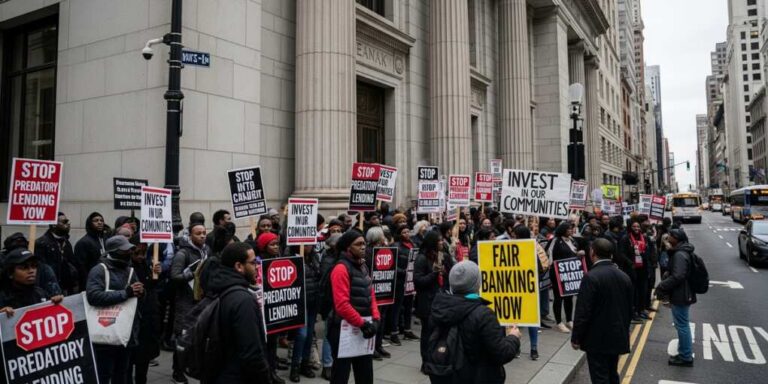
Thirty-five million dollars. Sitting in a government account. Earmarked for the people of Baltimore who got chewed up and spit out by decades of drug war enforcement. And not one single dime has made it to a single resident.
Not one.
Welcome to the reparations experiment, folks — where good intentions go to die in a conference room full of politicians fighting over who gets to hold the checkbook.
The Setup
Here’s the backstory. When Maryland legalized recreational marijuana back in 2023, somebody had a bright idea: take a cut from every sale and funnel it into a reparations fund. The money would go toward reinvesting in communities wrecked by the War on Drugs — neighborhoods where people got locked up for selling the same plant the state was now taxing at a healthy markup.
Noble enough on paper. Cannabis sales in Maryland topped $1.1 billion in just one year. Baltimore’s share of the reparations pot swelled to over $35 million. That’s real money. Life-changing money. Homeownership programs, wealth-building initiatives, community reinvestment — the whole pitch sounded like a redemption story waiting to happen.
And here’s where it gets stupid.
Everybody Wants the Keys
Instead of getting that money into the hands of actual human beings, Baltimore’s power players launched into a full-blown turf war. City Hall says the mayor has final authority over the funds. The Baltimore Community Reinvestment and Reparations Commission — a 17-member body created in November 2024 specifically to manage distribution — says hold up, this is our lane.
So there they sit. Two camps. One pile of cash. Zero movement. The first round of funding, according to the Baltimore Beat, may still be a full year away.
Three years after legalization. Thirty-five million dollars collected. And the people it was supposed to help? Still waiting. Still broke. Still watching bureaucrats play king of the hill with their futures.
The Money Was Never Supposed to Be a Slush Fund
State Senator Mary Washington, who sponsored the original bill, didn’t mince words. She told the Beat exactly what the law intended — and what Baltimore is turning it into.
“The money was never intended to be a slush fund for a county executive or mayor.”
Washington said the funds were meant to reinvest in communities still reeling from mass incarceration — communities facing gaps in homeownership, wealth, and life expectancy. Not to become a political football tossed between competing egos at City Hall.
But that’s exactly what happened. Because when you put $35 million on the table and tell a bunch of politicians to share nicely, you get the governmental equivalent of toddlers fighting over a toy truck. Except the toy truck is people’s lives.
A Pattern That Never Changes
This is the reparations problem in miniature. The concept polls well. The speeches write themselves. Everyone gets to feel righteous at the press conference. But when the rubber meets the road — when it’s time to actually deliver — the whole machine grinds to a halt because nobody can agree on who gets credit, who gets control, and who gets to cut the ribbon.
Meanwhile, Black communities in Baltimore that are still being targeted by drug enforcement get to watch their reparations money collect dust in a government ledger. The War on Drugs didn’t pause while the commission and the mayor’s office lawyered up. Life didn’t stop. Bills didn’t stop. But the help sure did.
And this is just Baltimore. Imagine this scaled nationally. Imagine the feeding frenzy. Every activist group, every city council member, every nonprofit with a letterhead would be clawing for a piece. You’d need a referee, a bouncer, and a priest.
Where This Is Headed
Trump has been clear about where he stands on race-based wealth transfers, and stories like this hand him the argument on a silver platter. He doesn’t need to make the case against reparations — Baltimore is making it for him. You can’t sell the American public on a program that can’t even function in one mid-sized city without collapsing into a bureaucratic cage match.
The smart money says this fund gets bled dry by administrative costs, legal disputes, and consultant fees long before any Baltimore resident sees a check. That $35 million will evaporate like rain on hot asphalt — and the same politicians who created the mess will blame someone else for the drought.
Reparations are here, alright. They’re just not for the people who were promised them.